Red oak is one of the most installed hardwood species in American homes, and for good reason. It’s durable, widely available, and takes a finish well, but only when you understand what you’re working with. The moment most homeowners run into trouble is at the staining stage. They pick a color they love on a Pinterest board or a store sample chip, apply it to their red oak floors, and end up with something that looks blotchy, too pink, or nothing like what they expected.
This guide is for homeowners who want to get it right the first time, and for anyone trying to understand why red oak stains behave the way they do before committing to a color. We’ll cover the best wood stains for red oak flooring, what makes certain stains perform better than others on this species, and which popular colors tend to disappoint.
What Makes Red Oak Different from Other Wood Species
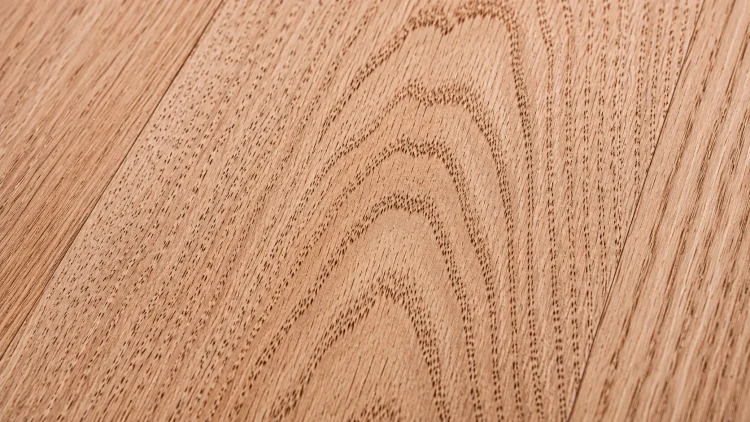
Before ranking anything, you need to understand the wood itself. Red oak has a very open, porous grain structure. That’s what gives it its character, but it’s also what makes staining unpredictable if you skip the prep work.
The grain on red oak is coarser than white oak, maple, or cherry. When stain is applied, it absorbs unevenly across the grain pattern, especially if the wood hasn’t been properly sanded through the grits. You can end up with darker areas along the grain lines and lighter, almost muddy-looking patches in between.
Red oak also has a natural pink or reddish undertone baked into the wood fiber itself. That undertone doesn’t disappear when you stain. It either gets masked by the stain color, it complements it, or it fights against it. Any stain selection for red oak flooring has to account for that baseline color.
Why Stain Testing on Red Oak Is Non-Negotiable
There is no skipping the test board stage with red oak stains. What looks warm and neutral on a white oak sample will read completely different on red oak. The pink undertone can turn a gray stain lavender, push a brown stain orange, or make a walnut-toned stain look muddy.
Any reputable flooring contractor will apply two or three stain samples directly to your floor, in your lighting conditions, before committing to a full application. If someone quotes you a job without mentioning test patches, that’s a problem.
The light in your room matters too. A stain that looks like a clean medium brown in a showroom can look almost auburn in a room with warm incandescent lighting, or cold and gray in a north-facing room with no direct sunlight. Test under the actual lighting conditions the floor will live in.
The Best Wood Stains for Red Oak Flooring, Ranked
These rankings are based on how predictably each stain performs on red oak, how well it works with the wood’s natural undertone, and how the finish holds up over time.
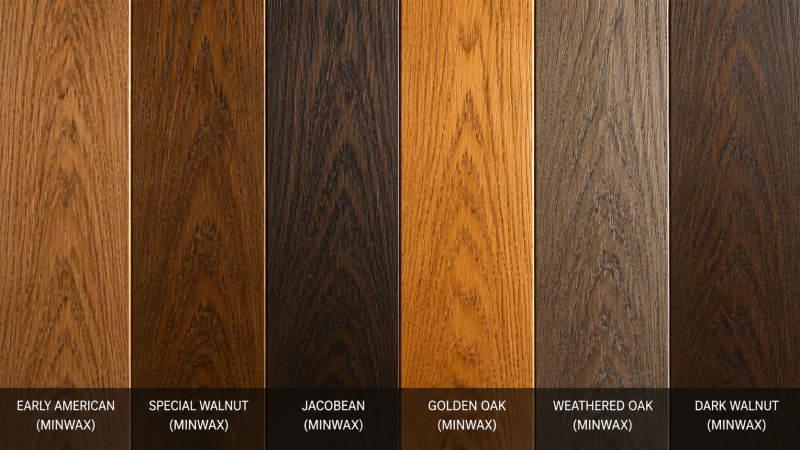
1. Early American (Minwax)
Early American is probably the most forgiving stain you can put on red oak. It sits in a warm medium-brown range that works with the wood’s natural reddish tone rather than against it. The result is consistent, the grain reads clearly through the finish, and it pairs well with both oil-based and water-based polyurethane topcoats.
It’s not a trendy color, but it’s a reliable one. If you want a classic hardwood look that photographs well and ages gracefully, Early American on red oak is a safe, smart choice. It’s one of the most commonly requested red oak stain colors in refinishing projects for a reason.
2. Special Walnut (Minwax)
Special Walnut goes slightly deeper and cooler than Early American without tipping into dark territory. On red oak, it produces a rich medium brown that does a reasonable job of neutralizing some of the pink undertone. It’s a particularly good option for older homes where the floors have already yellowed slightly with age, since the cooler brown tone balances that out.
One thing to watch: Special Walnut can look flat if applied over red oak that hasn’t been fully sanded. The open grain needs to be clean and consistent for Special Walnut to read as intended.
3. Jacobean (Minwax)
Jacobean is a dark, chocolate brown stain that sits in the espresso range. It’s popular because it gives hardwood a dramatic, high-end look that photographs extremely well. On red oak specifically, it does a strong job of covering the natural pink undertone because the color is deep enough to overpower it.
The trade-off with dark red oak stains like Jacobean is that every scratch, scuff, and pet claw mark shows more prominently over time. Dark stains on red oak flooring also require more meticulous prep work. Any sanding swirl marks or uneven surface areas will be visible under a dark stain in a way they wouldn’t be under Early American.
If you have kids, pets, or heavy foot traffic, think carefully before going this dark.
4. Golden Oak (Minwax)
Golden Oak leans into the natural warmth of red oak rather than trying to change it. The result is a honey-amber look that reads as almost natural with just a bit more warmth and depth. It’s not for everyone stylistically, but it’s worth mentioning here because it performs exceptionally well on red oak from a technical standpoint. The absorption is even, the grain reads clearly, and it’s one of the lowest-risk stain options on this species.
It fell out of fashion during the gray-and-white interior trend of the 2010s, but warm wood tones are making a strong comeback, and Golden Oak on red oak is genuinely striking when paired with the right interior finishes.
5. Weathered Oak (Minwax)
Weathered Oak is where things get interesting and risky. It’s a cool, light gray-brown stain that’s been popular in modern and Scandinavian-influenced interiors. The problem with gray or cool-toned red oak stains is that the pink undertone doesn’t disappear just because you want it to.
Weathered Oak on red oak can look great with the right prep and application technique, but it can also look muddy, pinkish-gray, or uneven if the conditions aren’t right. Some contractors use a pre-conditioner or a tinted base to neutralize the undertone before applying a gray stain. Without that extra step, Weathered Oak is a gamble on red oak.
If a cool gray floor is the look you’re after, white oak is genuinely a better candidate for that stain family. But if you already have red oak floors and you’re set on a cooler tone, have an experienced contractor test it thoroughly first.
6. Dark Walnut (Minwax)
Dark Walnut sits between Special Walnut and Jacobean. It gives you depth without fully committing to the espresso end of the spectrum. On red oak, it produces a warm, rich brown that reads as sophisticated without being as high-maintenance as Jacobean.
It’s a strong choice for homeowners who want something darker than a medium brown but aren’t ready to go full dark stain. The grain still reads through Dark Walnut, which is one of the things that makes red oak flooring visually interesting in the first place.
What About Custom and Mixed Red Oak Stains?
Off-the-shelf stain colors are a starting point, not a ceiling. Experienced flooring contractors routinely mix stains to hit a specific tone that a stock color can’t achieve. If you want a warm brown that reads slightly more gray than Early American but isn’t as cool as Weathered Oak, a custom blend can get you there.
Custom mixing also helps when you’re matching existing flooring in another room, replacing boards that need to blend in, or trying to achieve a specific look you’ve seen in a design publication. The key is that whoever is doing the mixing needs to know red oak’s tendencies well enough to predict how a custom blend will react on the wood.
Oil-Based vs. Water-Based Stains on Red Oak
This is a question that comes up on almost every refinishing job. Oil-based stains penetrate more deeply into red oak’s open grain and tend to produce richer, more saturated color. They also have longer working times, which matters on a wood species where even application is important.
Water-based stains dry faster, have lower VOC levels, and are easier to clean up. They can produce excellent results on red oak, but they require faster, more confident application technique because you have less time to work the stain before it starts setting.
For most red oak flooring projects, especially larger open areas, oil-based stains are the more forgiving choice. Water-based options make more sense in smaller spaces or when fast turnaround time matters.
The Prep Work That Actually Determines Your Result
No stain performs well on a poorly prepared surface. With red oak specifically, the sanding sequence matters more than almost anything else. The floor needs to be sanded progressively through the grits, finishing at 80-grit for staining (not finer, because too smooth a surface can actually inhibit stain absorption on open-grained woods).
Vacuuming and tack cloth wiping between steps removes dust and debris that would otherwise get trapped under the stain. The floor also needs to be fully dry and at a stable temperature before any stain application begins.
This is the part of the job that separates a floor that looks professionally done from one that looks like a DIY project. The stain color gets the attention, but the prep work is what makes it look the way it does.
A Note on Topcoat Selection
The stain is only half the equation. The topcoat you choose affects how the stain color reads in the finished floor. An oil-based polyurethane adds an amber tone that will warm up any stain color, which works beautifully with Early American, Special Walnut, and Dark Walnut, but can push Weathered Oak back toward warm territory.
Water-based polyurethane dries clear and preserves the stain color more accurately. If you’re using a cooler or lighter stain on your red oak floors, a water-based topcoat gives you a better chance of the finished floor matching your expectations.
Matte and satin finishes tend to show less wear than gloss, and they read more naturally on red oak grain.
Getting Red Oak Stains Right in Rochester
Rochester homes deal with real seasonal humidity swings, which means your hardwood floors are expanding and contracting throughout the year. That’s relevant to staining because moisture content in the wood affects how evenly stain absorbs. A floor that’s been exposed to excessive humidity or has moisture issues underneath it will not stain evenly, regardless of which product you use.
A contractor who knows the local climate and has experience with red oak in this region understands these variables and accounts for them before the first drop of stain touches the floor.
If you’re refinishing red oak floors and want to get the stain color right or simply in search of a hardwood floor company in Rochester, NY, explore our hardwood refinishing services to see how we approach the process from prep to final coat, or call us at (585) 303-5704 to talk through your project and get a straight answer on what stain will actually look like on your floors.
